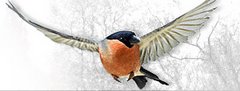
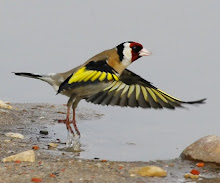
Photographs taken during the 4th July week, during my annual vacation in Ptown.
Click pics for larger version
 |  |  |
 |  |  |

Click pics for larger version
| | |
| | |
 Young Mallard |  Canada Geese |  Young Blue Jay |
 Green Lakes |  Niagara Falls |  Dark-eyed Junco |
 Tiger Swallowtail |  Chipmunk |  Taughannock Falls |
 |  | |
| Rio bridge (2004) | ||
 | ||
| Manhattan, NY | Miami Beach | |
 |  |  |
| Isthmus of Corinth | Chicago | Windsor Castle |

 One of the standard air routes between Athens and western Europe takes a path just west of the Albanian coast. If you are seated on the right side of the airplane, you can see the city of Vlorë (italian: Valona, greek: Αυλών). The Bay of Vlorë is bound by the characteristic Karaburun peninsula, beyond the tip of which lies the small island of Sazan (it. Saseno, gr. Σάσων - Sáson).
 In 1864 the Ionian Islands were given to Greece. That's when Sáson/Sazan becomes de jure part of the greek state. However, Greece did not try to make its presence felt on the uninhabited island at that point, and never tried to occupy it. In fact, Ottoman Turkey reestablished its presence there by building a lighthouse in 1871. During the Balkan Wars, the greek navy captured Sáson on 8 November 1912, almost fifty years after it was legally transfered to Greece. In early 1914 though, after the great powers finalized the borders of the newly independent Albania, Greece was asked to cede the island to Albania. The greek government introduced the relevant law proposal (of just two articles) to Parliament, which voted on it on 28 May and published it on 7 June. The greek guard of twenty-five soldiers left the island on 2 July 1914. Thus ends the greek presence on Sazan.
 That was not the end of the story, by the way. Italy took possession of the island in 1920 and kept it through World War II. It was formally restored to Albania in 1947, and was used as a base of the Soviet navy until 1961. It is currently used by Albania and the Italian coast guard in their efforts against illegal migration and contraband traffic.

 But perhaps the most unique one, whose location happens to be rather easy to miss, is an eye catching representation of what would appear to be a Fallen Angel (i.e. Lucifer, the devil) or perhaps Icarus. It is located on a building at the corner of Calle Mayor and Calle de los Milaneses, about half-way between Puerta del Sol and the Almudena Cathedral. As it turns out, it is "Ni Ícaro, ni el diablo", according to an interview of the artist who created it in 2005, Miguel Ángel Ruiz. Its title is, funnily enough, Accidente Aéreo, Air Crash! Of the many photos that I took, I chose to post this one, as I like the contrast between the green patina and the ochre background.
 Halifax, Nova Scotia |  Greenland |  Boston Harbor |
 Galaxidi & Itea Γαλαξίδι & Ιτέα |  Halkida Xαλκίδα |  Ioannina Ιωάννινα |
 Μornos lake, Vardousia & Giona mntns Λίμνη Μόρνου, Βαρδούσια & Γκιώνα |  Alkionides Bay, Porto Germeno Κόλπος Αλκυονίδων, Πόρτο Γερμενό |  Kalymnos Κάλυμνος |
 For anyone who happens to like both piano music and history, few twentieth century personalities can match the fame of the Polish pianist, composer, and statesman Paderewski.
 Polish national hero Ignacy Jan Paderewski (1860-1941) was "the most publicized, most admired, most successful and most legendary pianist after Liszt", as Harold Schonberg writes in The Great Pianists (a must-have book for any lover of piano playing). Firmly rooted in the 19th century tradition of pianism, he composed romantic piano music in the salon genre, very melodic and pleasant, though not particularly original. He was a fervent patriot and in 1919, following Polish independence after World War I, he became prime minister. He represented his country at the Versailles peace conference that settled european affairs at the aftermath of the Great War. Such was his fame as a pianist, that when Clemenceau, the French prime minister, met him at the conference, he famously said "So now you are Prime Minister of your country. What a comedown!"

 Nonetheless, his concerts were so successful that he became very rich. He was very generous with his money and donated much of his fortune to charities and to Polish causes.
 One of my earliest and continuing musical fascinations is organ music. It started when I was fourteen (14) years old, when a colleague of my father's gave me, as a Christmas gift, a vinyl LP record (Archiv 2565 002) of organ music by Johann Sebastian Bach (1685-1750).
 It was a very fortunate introduction to the great works of Bach, as the LP, produced in 1971, was by a great german organist, Helmut Walcha (1907-1991), playing on the Grand Organ of the St Laurens Church, Alkmaar and the organ in the Church of Saint-Pierre-le-Jeune, Strasburg. With his magnificent and at the same time subtle playing, Walcha remains to this day my favorite Bach organ interpreter. That old LP, which I still have, is in fact a selection from the complete recording of Bach's organ works by Walcha. Many years later I bought the 12-CD set. It remains in print and is still available today.
 Among the pieces featured on the record is the Pastorale, BWV 590, one of my favorite not-so-known Bach works, and several of his famous chorale preludes, written on themes of lutheran hymns. Among them, one that I find very moving is Ich ruf' zu dir, Herr Jesu Christ, BWV 639 (I call to you, Lord Jesus Christ - Κύριε, εκέκραξα προς Σέ) which Bach composed around 1713 and is part of the Orgelbüchlein collection of 46 chorale preludes.
 When it comes to songs, one thing that always attracts my curiosity is non-greeks singing greek songs. One of the most humorous such cases is Donald Swann, of the legendary 50's and 60's Flanders and Swann duo, singing To Kokoraki (Το Κοκοράκι - The Cockerel), a satyrical traditional greek song. Before joining Michael Flanders, composer and pianist Donald Swann (1923–1994) studied modern languages in Oxford, and during World War II served in Greece "whose music and culture became a life-long passion and influence". In that sense his admirable rendering of To Kokoraki is not surprising.